The Experience

What happened? +

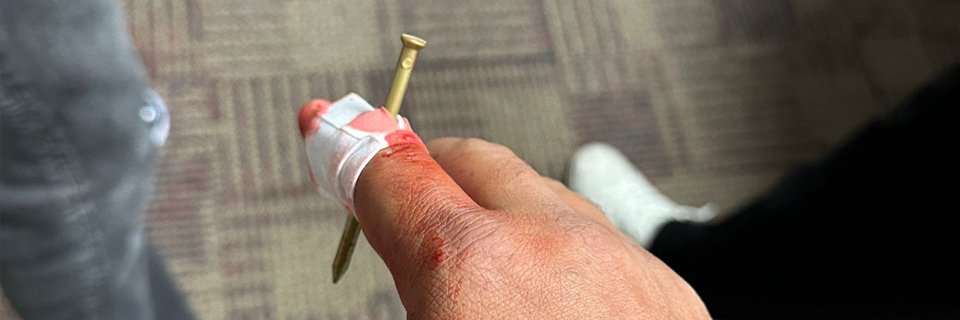
On our second day of the First Aid Course. Stephanie gave us a task where I was performing as a patient, and 4 people were giving me first aid (Parth, Sukh, Kiran, and Olloche). The scenario was that I had hurt my finger while woodworking, and a nail had gone through it. I should also act on sharp chest pain. From that patient's perspective, I was observing how they react if something happened in the real world. Because "my acting skills" were really good, they were distressed even though they knew that I was performing an act; they completely ignored my chest pain. They were more focused on visible injury they asked me about the chest pain, but didn't take it seriously.

When and where did the experience occur? +

This happened the second day of First Aid Course, during a practical drill at our lab.

Who was involved? +

I, Ajay kumar.
Parth, Sukh, Kiran, and Olloche (as the first aid provider team).
Stephanie, Our instructor.

Feelings & Actions

How did you feel during the experience? +

During that act, I was thinking that they would focus on the less visible symptoms, which could be more dangerous than visible injury. There was a time when I was really frustrated by how they could ignore my chest pain. I was also thinking about how the actual patient could feel who will be in the same situation.

How did this experience impact others? +

My acting skills put them in a stressful situation. Because I was making loud noises during the act, Stephanie came to us and debriefed us about the chest pain. Where we all learned powerful lessons about comprehensive assessment.

What did you do well during the experience? +

I think I did a really good job acting for my group. I gave them a genuine situation to practice their skills. I think I also did well by observing their approach and gained a unique experience from a potent perspective.

What could you have done differently or improved on? +

I don't think there is anything we could do differently, but one thing which I really appreciate is that it gives us more sense of how we will approach this kind of scenario because of the mistake my group and I made in the act. We will definitely not repeat that in an actual scenario if it happens in the real world.

What were the consequences or outcomes of the experience, both positive and negative? +

PositiveWe got a new point of view to approach this kind of scenario, which we will never forget in our lifetime
NegativeMy team overlook the symptoms of chest pain

How do you feel about the experience now, after reflecting on it? +

It was frustrating to see my teammate ignore the key detail, but it gave me firsthand understanding that it could be possible as a human or a fresh CCA. But I also feel confident that I have experience which could save someone's life if I keep myself calm and focus on the ABC (Airway, Breathing and Circulation) rule of first aid.

Analysis

What principles, theories, or concepts from your training are relevant to this experience? +

Tunnel Vision Ignoring of ABC (Airway, Breating and Circulation) unbiased assessment anchoring bias

How do these principles, theories, or concepts relate to the situation you encountered? +

Due to stress, the team had tunnel vision, they were just focusing on the visible injury, not practicing the unbiased assessment. Because they are treating the finger injury, not paying attention to chest pain, which defines the anchoring basis on physical injury. If they follow the ABC, they could figure out that I am having chest pain.

Does this experience influence your future actions or approach? +

Yes, absolutely. This experience gave me a first-hand understanding of how to approach first aid care for a patient. I will try to keep myself calm and not focus only on visible injury but also pay attention to body language, as well as find cues of internal injury of the patient

What key lessons have you learned from this experience, and how could it contribute to your personal and professional growth as a future CCA? +

The important key lesson is unbiased assessment. I should pay attention to the patient's complaints. Listen carefully and don't ignore their problems and investigate all the issues he/she having.

Action Plan

Based on your analysis, what specific steps or actions will you take to apply the lessons learned to enhance your skill development and proficiency? +
  • Make a Checklist: I will create a checklist for patient assessments to ensure I check all relevant body systems and not just the area of complaint.
  • Active Listening: In the future, I will practice active listening skills to ensure I listen not just hear the patient.
  • Taking Feedback: I will always take feedback about my procedure. We are human we can make mistakes. I believe CCA is a life long learning process, taking feedback from your seniors or peer team members will help me to improve my care.
How will you implement these actions or steps in across the CCA Program? +

I will start with my checklist. By active listening, I can ensure that I can provide the proper care to my clients and also take feedback and update my checklist if I miss something or if I think I should update new points if I miss something during the procedure.

What resources or support might you need to successfully implement your action plan? +

Communication resources and assessment protocols are provided in our course materials. I will also work on the feedback I got from team members and the instructor